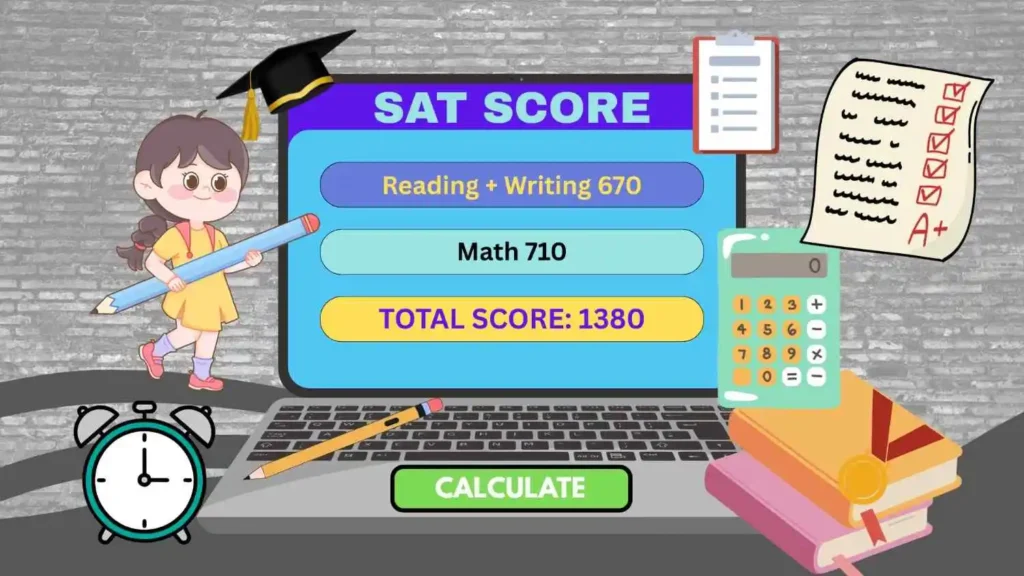
Preparing for the SAT in 2026 can be daunting — especially if you have no idea where you stand. Basically, understanding how your answers are being scored is so important. The SAT Score Calculator will give you a better idea of your score, areas to improve and how to optimize test preparation. In this blog, we’ll break down the new structure, adaptive modules, and tips for 2026.
Key Changes in the SAT Exam Structure (2026 Update)
Look, the structure is a huge change from the old paper test in the Digital SAT. It’s shorter, adaptable, and requires a clever strategy from you!
| Section | Total Questions | Time Allotted | Modules |
| Reading & Writing | 54 | 64 minutes | 2 × 32 min modules |
| Math | 44 | 70 minutes | 2 × 35 min modules |
| Total | 98 | 2 hours 14 minutes | — |
Knowing this structure and timing is key.Focus on each module, pace yourself, and practice strategically for the Digital SAT.
Adaptive Testing Explained: How the New System Works
The most significant update in the SAT 2026 includes the use of an adaptive test. Your performance on the questions in the first part will be used to set the difficulty level for the second part of the test. By performing better earlier, you get difficult questions in the second part of the test that give you the opportunity to improve your overall score. The use of a SAT Score Calculator will assist you to see how your scores in Module 1 influence your final scores.
How the New SAT Format Affects Your Final Score
The new SAT format is important to your final score as a result of adaptive modules. The difficulty of Module 2 is dependent on how well you do in Module 1 and so it is easy to make mistakes in Module 1 that can reduce your final grade. The shortened passages and time limits in Reading & Writing increase pressure, the built-in Desmos calculator helps in Math—it doesn’t negate the importance of taking careful time to solve a problem. By knowing what changes to expect, you can leverage your strengths, manage your time appropriately, and use a SAT Score Calculator to approach an informed guess of your final score.
Digital SAT vs Old SAT: Major Differences Compared
Knowing the difference between the old paper SAT and the new SAT exam is a major factor in adjusting to a new way of studying for the SAT. The following is a good comparison:
| Feature | Old Paper SAT | Digital SAT 2026 |
| Test Format | Paper & pencil | Computer-based, Bluebook app |
| Total Questions | 154 | 98 |
| Duration | 3 hours | 2 hours 14 minutes |
| Sections | Reading, Writing & Language, Math | Reading & Writing, Math |
| Modules | Single section per subject | 2 adaptive modules per section |
| Calculator | Not allowed in some sections | Built-in Desmos calculator |
| Passages | Longer reading passages | Shorter passages, adaptive difficulty |
By considering these differences you can plan your timing, pacing and practices. Adaptive modules: each of the questions counts equally, so prepare well for most impact.
Conclusion
The SAT changes for the 2026 for how your results are converted to a final score. Every early question counts with adaptive modules, shorter passages and built-in Desmos calculator. Understanding this will help you to plan more effectively, concentrate on your strong points, and handle those difficult areas. Using a SAT Score Calculator allows you to see where you stand in 2026 college admissions and plan accordingly, to get the most out of your SAT studies.
FAQs
Q1. How does the adaptive module system affect my SAT score?
The difficulty of the second module in each section is set in the first module. If you get it right at the beginning you will get harder questions later which will help to improve your final score, so pacing and accuracy are very important.
Q2. What is the total duration of the 2026 Digital SAT?
The new test consists of 54 Reading & Writing questions (64 minutes) and 44 Math questions (70 minutes) for a total of 2 hours 14 minutes.
Q3. How can I estimate my performance on the new SAT?
Using a SAT Score Calculator can help you estimate how many points you’ll earn in the entire test by converting raw answers from each module into scaled answers to understand your strengths and areas of improvement.