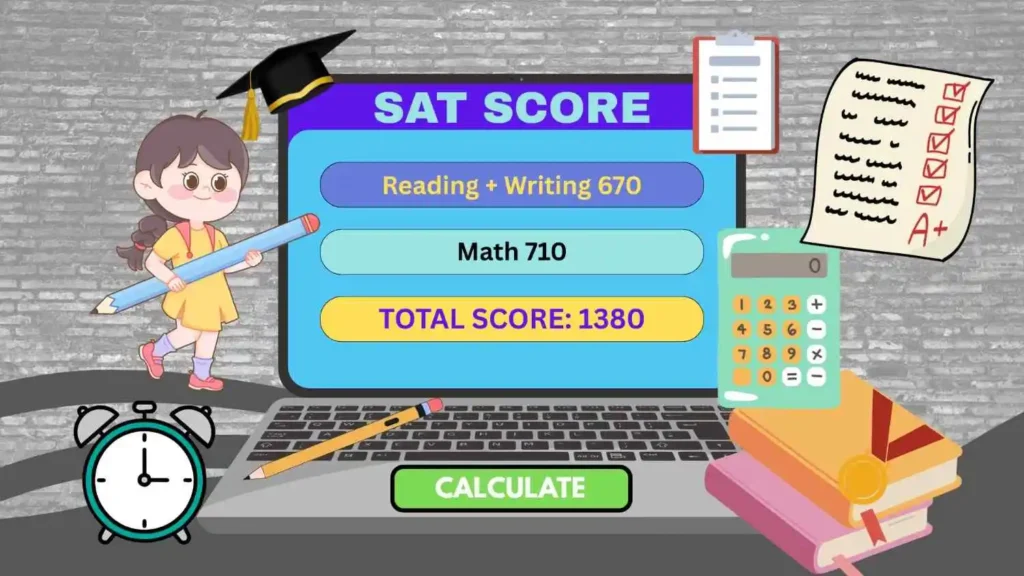
Is it possible to have missed some of the questions and still get a 1500? Yes, but it depends on which questions you miss. The fact is, not all SAT mistakes are created equal. If you get a wrong answer in a difficult module, it will have a different impact on your score than it will if you get a wrong answer in an easy module. Remember, knowing this difference early will save you plenty of stress. The one thing about it is this: knowing and using an SAT score calculator allows you to see where errors count and plan accordingly. Let’s dive into this blog to know about what you need to know about it.
How the SAT Scoring System Works
If you think about it, the SAT is an adaptive test: the score in Module 1 affects the difficulty of Module 2! There is a difference between raw score and scaled score: correct answers are scaled to the 400–1600 range. The scoring curve (equating) varies with test difficulty as well. Look, math tests are difficult because students will lose 20 to 30 points for making even minor mistakes while reading and writing students face less strictness because their work errors have less impact on their final score.
Estimated Wrong Answers for Different SAT Scores
With 98 questions on the Digital SAT, the number of errors you can get away with varies widely by module difficulty and the scoring curve (equating) for that test date. The trick is that the difficulty of Module 2 depends on what you get in Module 1! There are fewer points for missing questions in the more difficult second module compared to the simpler one. Top targets estimated mistakes:
| Target Score | Approx Wrong Answers |
| 1550+ | 1–2 |
| 1500+ | 3–5 |
| 1400+ | 7–9 |
Note: These are estimates. “Adaptive scoring” means that missing one “easy” question affects your score more than missing one “hard” question.
How Adaptive Modules Impact Your SAT Score
The bottom line is, if you make too many mistakes in Module 1, the second module automatically becomes easier. So, even if you answer all the questions in Module 2 correctly, you may only be able to achieve a maximum of about 1500. The trick is that this is when knowing the difference between a hard and easy module is essential. Don’t forget sectional weightage; Math mistakes impact your score more than reading and writing. Adaptive modules determine what your maximum is, not just what your score is.
Use an SAT score calculator to predict your score.
Look, it’s difficult to accurately predict your actual SAT score due to adaptive modules and because of equating. The catch is an SAT Score Calculator will allow you to input your correct answers and get a score estimate. You can make errors in various sections, identify your weak points and practice those areas. The truth is no one can give you a 100% accurate prediction, but this tool helps you make your preparation more strategic and provides you with a realistic score to aim for for each section.
Conclusion
The bottom line is, missing questions doesn’t automatically ruin your SAT score, but which questions you miss matters. Consider this: concentrate on the hard module 2 questions and minimize the number of mistakes in math. But the reality is, it’s better to plan smart than hope for luck—plan strategically and plan carefully. Here’s the trick: practice a lot, know adaptive scoring and use an SAT Score Calculator to maximize your odds of getting a score of 1500+!
FAQs
Q1: How many questions are you able to leave out at the SAT and still get a good score?
You can miss a certain number of questions which depends on the difficulty level of the test modules. The SAT Score Calculator provides an estimation tool which allows users to determine their expected test score.
Q2: Does missing questions in Module 2 hurt more than Module 1?
Yes the mistakes in Module 1 will impact on the Module 2 that you get. Errors in Module 2 will only lose as many points as will be lost for errors in Module 1.
Q3: Can I still reach 1500+ with a few wrong answers?
Yes, but it depends on what question(s) you miss and how the adaptive scoring adjusts your final scaled score.